Several factors influence the quality of water provided by RO systems. To ensure that your drinking water purification system is operating efficiently, you can use professional RO Services in Haldwani. Knowing how RO systems work, the factors that influence water purity and when maintenance should be performed can help you make informed decisions about your drinking water.
RO water purification systems reduce impurities in the water including salts. The efficiency of a reverse osmosis system depends on the condition of the system parts, the quality of water being purified and regular maintenance.
What Makes Drinking Water Quality Different from One Area to Another?
Water can vary in quality depending on the source, the ground it comes from, the distribution network, and the surrounding environment. Water quality may be affected by:
- Minerals in solution – calcium and magnesium (water hardness)
- Total Dissolved Solids (TDS) – the amount of soluble material present
- Suspended matter – sand, rust and sediments can be present in water due to pipework
- Biological contamination – certain microbes may cause raw water to be unsuitable for drinking.
- Conditions within the distribution system – water quality can be affected by storage tanks and piping before reaching the property.
It is important for users to understand what quality their source water is to ensure that they select/ maintain the correct water purification system.
How Does Reverse Osmosis Actually Work?
Water is purified by reverse osmosis using a semi-permeable membrane. Water will be able to pass through the membrane, however many dissolved substances and contaminants will be reduced.
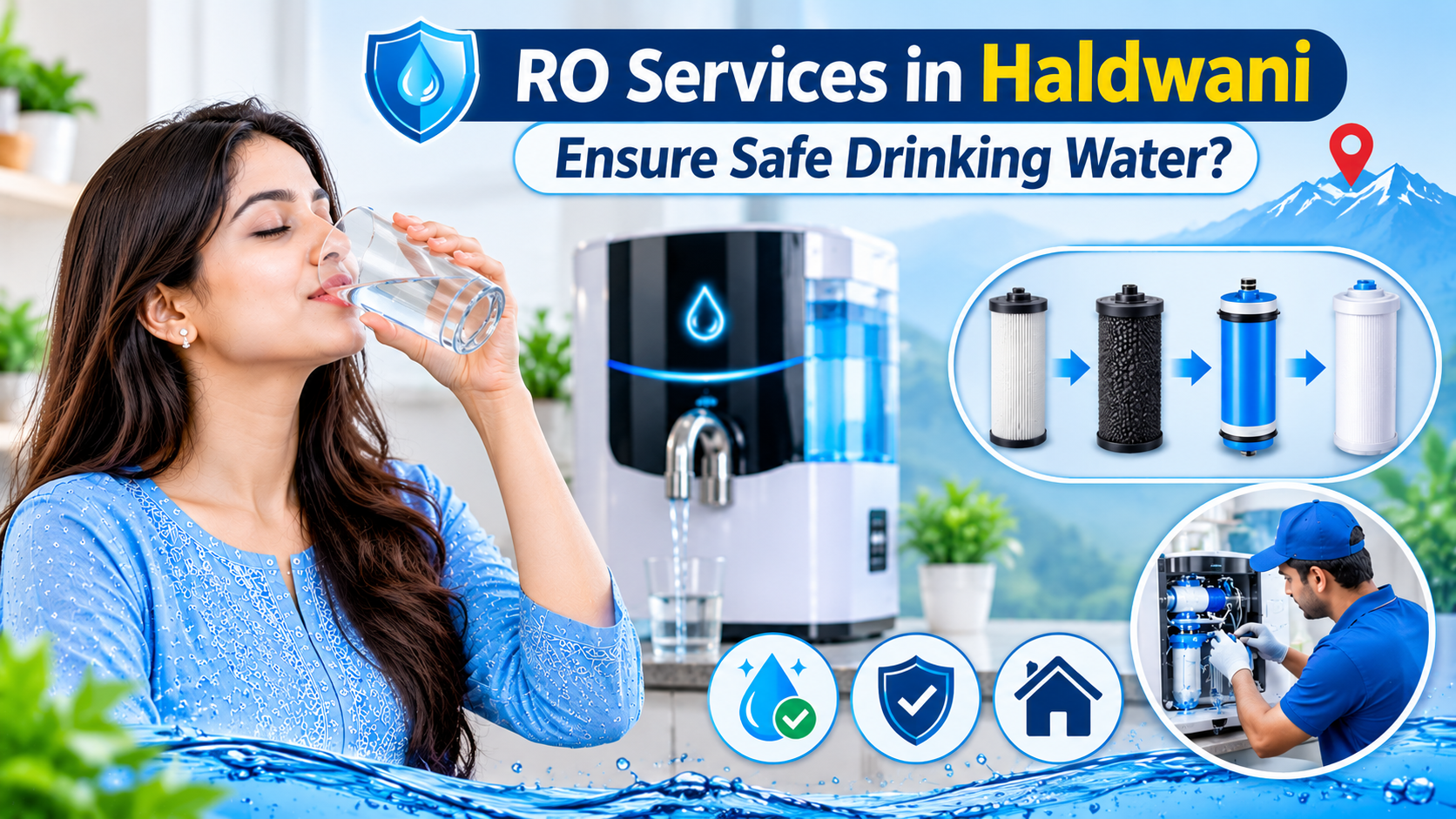
Purification can occur in several steps:
- Sediment filtration.
- Chlorine, odours and some organics are removed using activated carbon.
- RO membrane.
- Many dissolved substances/salts can be removed by this stage.
- Depending on the design of the purifier, further treatment may also occur. For example, further filtration and/or adding minerals. This produces purified water ready to go into the storage tank.
The efficiency of this system will depend on the design of the system, pressure of the water, membrane condition and the properties of the input water.
Can High TDS Levels Affect the Taste and Quality of Drinking Water?
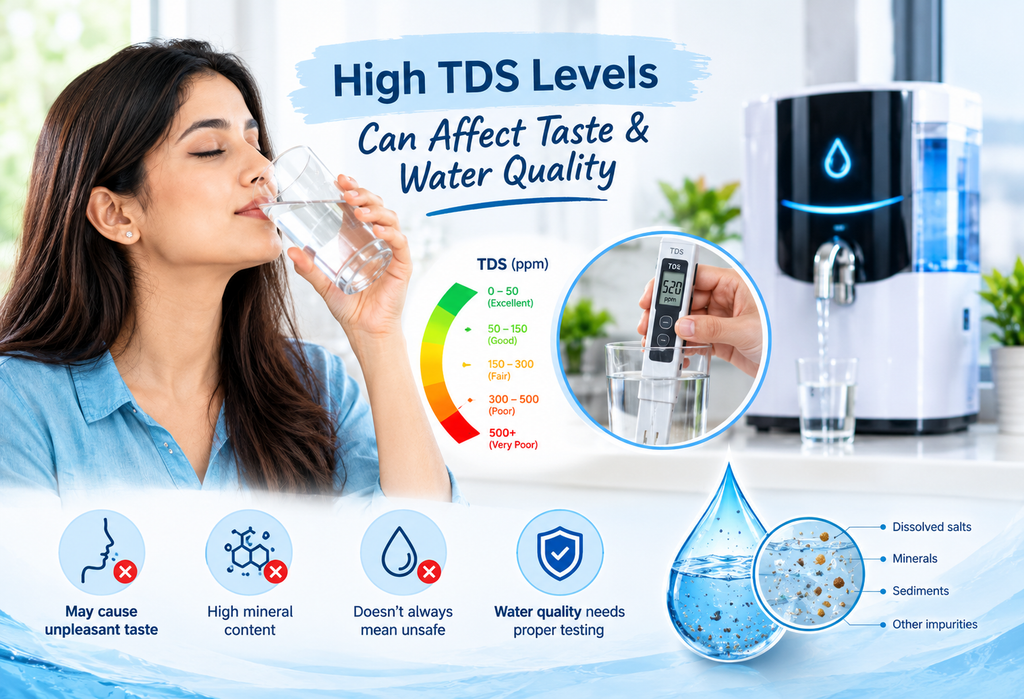
Yes. High Total Dissolved Solids can affect the taste of drinking water, especially when there are high amounts of dissolved minerals and salts in the water.
However, total dissolved solids alone do not indicate whether the water is fit for consumption. They measure the amount of dissolved substances in the water instead of detecting the contaminants.
Examples are as follows:
- High mineral content will cause salty or bitter taste of the water.
- Some dissolved substances require certain ways of treatment.
- Low TDS level does not automatically imply that there are no contaminants in the water.
- Total dissolved solid meters are unable to detect bacteria, viruses, and even specific harmful chemicals in the water.
Thus, testing of water is essential instead of TDS measurement alone.
What Happens When an RO Water Purifier Is Not Maintained Properly?
An RO purifier has different parts which help in the filtration process. Failure or wearing out of some of these parts could make the whole filtration process inefficient.
This could result in:
- Inefficient filtration process: This can occur due to a blocked pre-filtration part or a deteriorated membrane.
- Variations in water yield: This is caused by clogged filters, poor pressure in the inlet or faulty pumps.
- Strange tastes and smells: This might occur due to worn out filters, contamination in the storage tank or poor filtration process.
- Excess water wastage: Some mechanical or pressure related problem can make the ratio of purified water and reject water vary.
- Malfunctions: Overlooking some changes in the performance process can make existing technical issues get worse.
These inspection processes will help identify the problem and the appropriate corrective measure.
Why Does an RO Water Purifier Sometimes Produce Less Water?
Inadequate water flow rate is another issue faced by users of ro water purifier service in Rudrapur. But it doesn’t always imply that the RO membrane is faulty.
The following may affect water flow:
- Insufficient water pressure from the supply source
- Sediment/carbon filter clogging
- Membrane scaling or blocking
- Pump failure
- Faulty shut-off valve
- Storage tank pressure issues
An appropriate investigation will assist in pinpointing the real problem instead of replacing the parts.
Read More:https://wtrplus.in/blog/ro-service-in-haldwani-complete-guide-for-homes-businesses/
Is Every Water Purifier Suitable for Every Water Source?
Incorrect. Various types of water require various methods of purification, and different water purification technologies do not solve the same problem.
For instance, reverse osmosis systems work well where it is necessary to lower the concentration of dissolved solids. The purpose of ultraviolet purification is to deactivate microorganisms, while the purpose of sediment filters is to remove suspended solids.
Water purifiers selection should be based on the water quality tests and household needs. Not knowing the water quality, you may select a purifier that will filter too much or will fail to provide the needed purification.
How Can Households Maintain Better Drinking Water Quality?
In addition to buying a water purifier, there is a need for other measures to maintain quality of water. There are some measures that can be taken:
- Household water storage tanks should be kept clean.
- Drinking water storage vessels should be kept covered.
- Inside parts of storage tanks should not be touched.
- There should be check for leaks in water pipes and purifier.
- Filters used in water purifiers should be replaced as per the manufacturer’s guidelines.
- Water should be tested when it tastes or smells different from the usual one.
- It will assist in developing water handling skills in household members.
What Should You Consider Before Booking an RO Service in Haldwani?
Once the purifier begins to show some signs of malfunction, the important thing to do is figure out the reason behind it as opposed to changing its parts without thinking twice.
Some things to note before getting in touch with service personnel are:
- When the issue first surfaced.
- Any change in water flow and taste.
- Any leakage or noise in the purifier.
- Whether there has been regular filter replacement.
- Ask for an explanation of the problem from the technician before agreeing to part replacements.
- Get detailed information regarding parts and costs.
Those looking for the best RO service in Haldwani need to take into account technical expertise, clear suggestions, and experience with various models of purifiers other than just price.
For people who need their purifier to be installed in nearby regions, an RO fitting service in Rudrapur may also prove helpful.
Frequently Asked Questions About RO Water Purifiers
1. Does RO purification remove all impurities from water?
RO purification reduces many dissolved salts and contaminants, but no single purification method removes every possible impurity. The overall result depends on the system design, membrane condition and water characteristics.
2. What is the difference between TDS and water hardness?
TDS measures the total concentration of dissolved substances, whereas hardness mainly relates to dissolved calcium and magnesium. Both indicate different characteristics of water quality.
3. Why does RO water sometimes taste different?
Changes in taste may be related to incoming water quality, filter condition, membrane performance or storage tank hygiene. A technical inspection and appropriate water testing can help identify the cause.
4. Can an RO purifier work without regular maintenance?
An RO purifier may continue operating without regular servicing, but neglected maintenance can affect filtration performance, water output and component life. Following manufacturer-recommended maintenance is important.
5. How can I identify whether my RO membrane needs replacement?
Reduced water production, changes in rejection performance and water quality test results may indicate membrane deterioration. A technician should inspect the system before recommending replacement.
6. Is RO purification necessary for all drinking water sources?
No. RO purification is not necessary for every water source. The appropriate treatment method should be selected according to water testing results and the specific contaminants present.
7. Where can I find the best RO service in Haldwani?
Look for an experienced provider who can inspect your purifier, identify the underlying issue and recommend suitable maintenance or repairs. WTR+ provides RO-related service support; contact the team to confirm availability in your area.