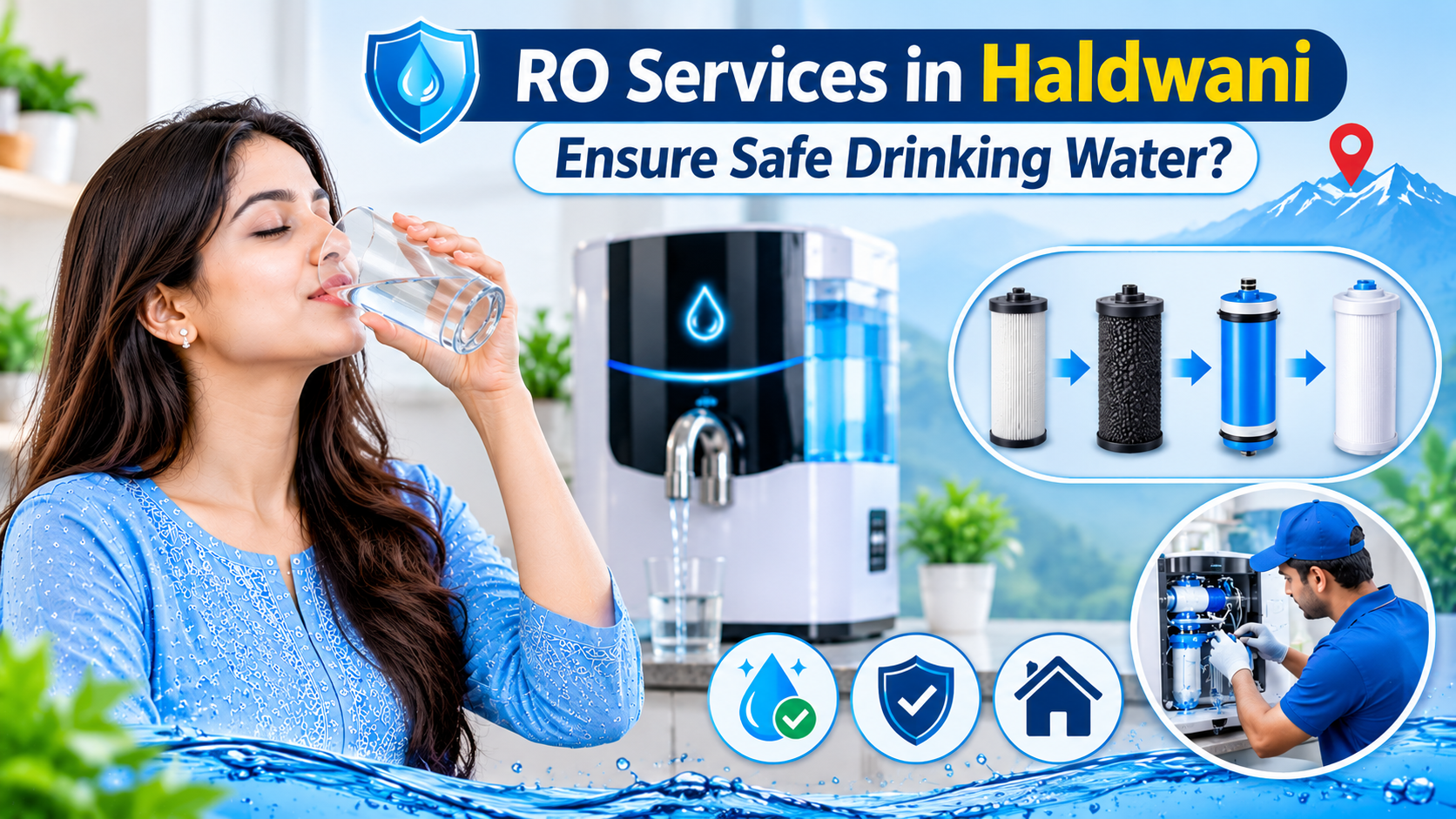
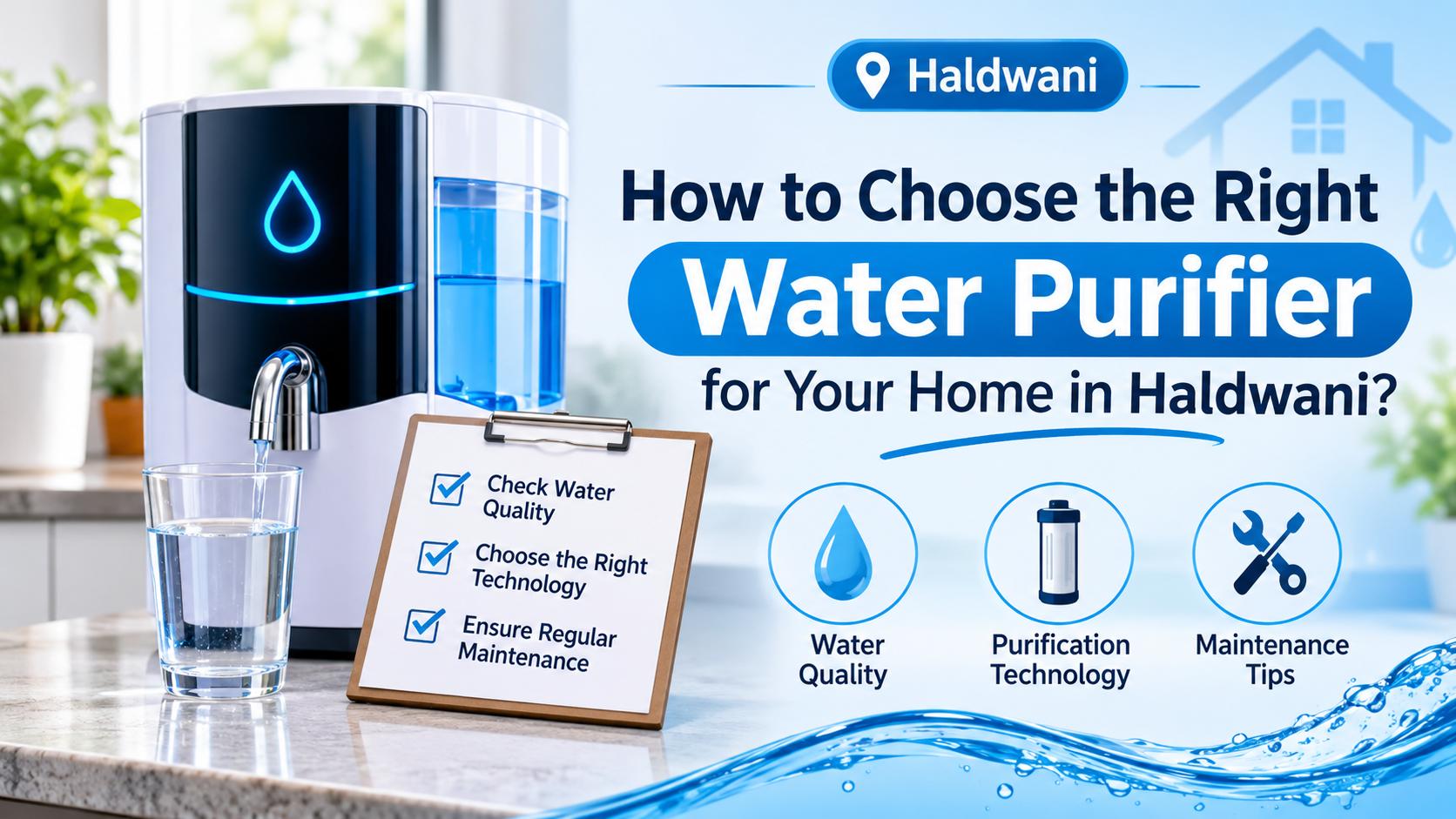
Is the tap water that is currently available for use in your house drinkable? Appropriate water purification will depend on various aspects including where the water is sourced from, the level of solute present and the correct purification method. Therefore, to ensure that you choose an appropriate purification device, it is key to analyse these areas.
To ensure proper functioning of the filtration system and to identify any technical issues, in addition to choosing an appropriate water purification system, one must also keep in mind that timely and proper water purifier service in Haldwani is needed. There are a number of points worth considering in order to obtain a better model, ranging from the understanding of water quality to comparisons of RO, UV and UF technology.
What Should You Check Before Buying a Water Purifier in Haldwani?
It is also important to know what type of water you are currently receiving. Municipal, ground and tanker water can all differ and so will therefore dictate the most suitable form of water purifier for your home.
Consider the following:
Type of water:
Is municipal, ground or tanker water provided to your home?
Water composition:
Your water may contain dissolved and/or particulate matter and/or other materials which may need to be purified.
Taste/Smell:
Alterations in the flavour and/or scent of your water can suggest that its composition has changed. However, this does not specify which materials are present.
Number of people:
Think about how many individuals will be utilising the purifier and how much water you typically drink.
Installation location:
Ascertain if there is suitable space to install the purifier close to both your water source and electricity point.
Considering these points will aid the selection process for a suitable water purifier for your home.
Read More: https://wtrplus.in/blog/how-do-professional-ro-services-in-haldwani-ensure-safe-drinking-water/
Which Water Purification Technology Is Best for Homes?
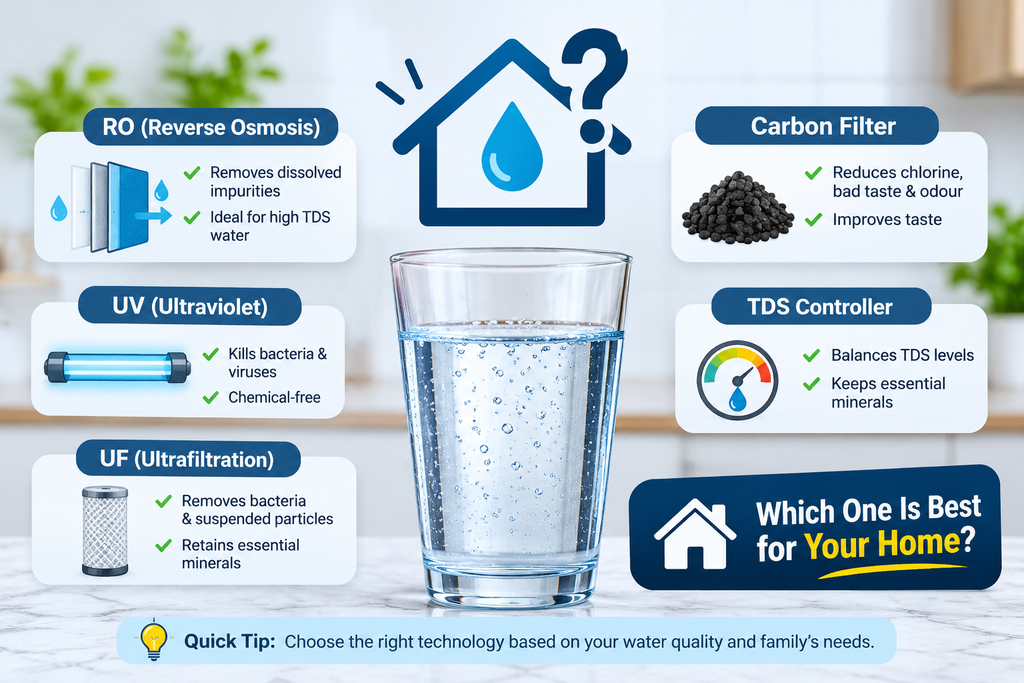
Different water purification technologies address different water quality concerns. Instead of selecting a purifier based on the number of filtration stages, understand what each technology is designed to do.
RO (Reverse Osmosis)
Reverse osmosis employs a semi-permeable membrane to remove ions and various other materials. This may be appropriate for water with high levels of dissolved solids or for water where there are particular substances which need to be removed by reverse osmosis.
Water can also be rejected during the reverse osmosis process. Water recovery rates and therefore water loss should therefore also be considered for a purifier.
UV (Ultraviolet) Purification
Ultraviolet light is utilised to kill bacteria and can often form part of a purification system if there is a risk of bacterial contamination.
UV however is not able to remove ions from water.
UF (Ultrafiltration)
Ultra-filtration incorporates a membrane to filter out some particulate and bacteria. In some ultra-filtration systems power is not needed. However, ultra-filtration typically does not remove ions from water.
Does Your Home in Haldwani Need an RO Water Purifier?
Prior to purchasing a Reverse Osmosis (RO) water purifier, investigate the composition of your water. Water can contain various impurities including dissolved salts, particulates and/or micro-organisms. Therefore, the type of purification system required can differ between these types of impurity. An unsuitable purifier can therefore both result in superfluous purification and fail to tackle the genuine issue with your water.
Although a TDS measurement can be used to gain general information regarding what is dissolved within your water, it will not indicate exactly what is in the water or confirm if it is suitable to drink.
Two properties could even obtain comparable TDS values, but encounter differing water purification issues. This is due to variations in water sources and may involve the need to purify either dissolved salts or alternatively micro-organisms and/or other impurities.
When deciding on an RO water purifier, you should:
Undertake a water analysis:
- This can give further information regarding your water and therefore the most suitable form of purification in comparison to simply analysing the TDS value.
- Select suitable purification:
- Whilst RO is good at removing a wide range of dissolved impurities, alternative purification methods may be more fitting for particular water related issues.
- Assess water usage and servicing requirements:
- As well as requiring regular servicing, RO also generates waste water. These factors should be analysed to determine if an RO purifier is suitable for your property.
By basing your choice of water purifier upon the nature of your water supply, you can both prevent unwarranted costs and improve your decision making.
Which Water Purifier Is Suitable for Municipal Water and Borewell Water?
The purification requirements of municipal water and groundwater can differ depending on their quality.
Purifiers for Municipal Water
Mains water may also be pre-treated. Water can then become affected in both storage and distribution.
Homes may require further water treatment to improve the water for issues such as turbidity, taste and/or smell. The correct type of filter should then be applied after analysing the water, not necessarily always requiring reverse osmosis.
Purifiers for Borewell Water
Water can also have differing levels of minerals, hardness and other compounds which is affected by the area’s geology.
Testing can therefore be a good way of analysing what form of treatment is suitable. RO systems can successfully remove dissolved impurities but again, this should be decided based on the test outcomes.
Purifiers for Tanker Water
Water can be sourced from various places and so can differ in quality. People should test their tanker water and then use an appropriate method of purifying it according to the substances present.
What Are the Common Signs That a Water Purifier Needs Attention?
There are a number of symptoms that can occur which can suggest that your water purifier needs checking or servicing.
Reduced flow rate – A reduction in the rate at which the water tank is filling may suggest that the filters are blocked and/or there are issues with the water pressure and/or membranes.
Altered flavour/aroma – This can often be due to the filters, and/or water tank, and/or the quality of the source water.
Water dripping – Water should not leak from pipework, fittings or the unit itself. Any leakage should be investigated to avoid further damage.
Strange noise – Unusual noises can suggest that there is an issue with the pump and/or other parts of the water purifier.
Regular power cut-outs – These may be due to electrical, mechanical and/or water pressure related problems.
Investigating your water purifier can assist in determining why it is displaying any of the above symptoms. Before changing elements such as the filters within your RO water purifier, those living in Haldwani who wish to obtain servicing should ensure that root causes can be correctly identified.
How Can You Maintain a Water Purifier for Better Performance?
Water purification equipment should also be maintained so that it can continue to operate effectively and so problems can be detected.
Some examples of maintenance are:
- Replacing filters either by reference to the manufacturers guidelines or depending on how they are wearing.
- Checking pipe work and joints for any leaks.
- Cleaning the holding vessel using suitable techniques.
- Observing and noting alterations to both the flow rate and flavour of the water.
- Maintaining and clearing the area around the water purifier.
- Adhering to the manufacturers maintenance guidance.
- Undertaking a specialist maintenance check if the water purifier is not operating as expected.
- The type and extent of maintenance required will depend on the water quality, the volume of water being used and both the design and state of repair of the water purifier.
How Do You Choose a Reliable Water Purifier Service Provider?
It is not enough just to find a service provider who can perform filter swapping. The service provider should carry out inspection to determine what caused the water purifier not to work properly.
These are the essentials you need to look for while choosing a service provider:
- Technological expertise: The technician must know how the purification system works and how all parts of the unit work.
- Problem identification: The technician must find out what kind of problem he encounters before recommending the parts to be replaced.
- Required components: The replacement membrane or filters must be compatible with the purification unit.
- Cost transparency: Labour charges, as well as inspection and part costs, must be clearly laid out and explained to you.
- Parts for machine maintenance: You need to be given practical tips about future maintenance and filter replacement.
If you need a water purifier service in Haldwani, go for companies that are able to find the reason for the problem and provide suitable solutions.
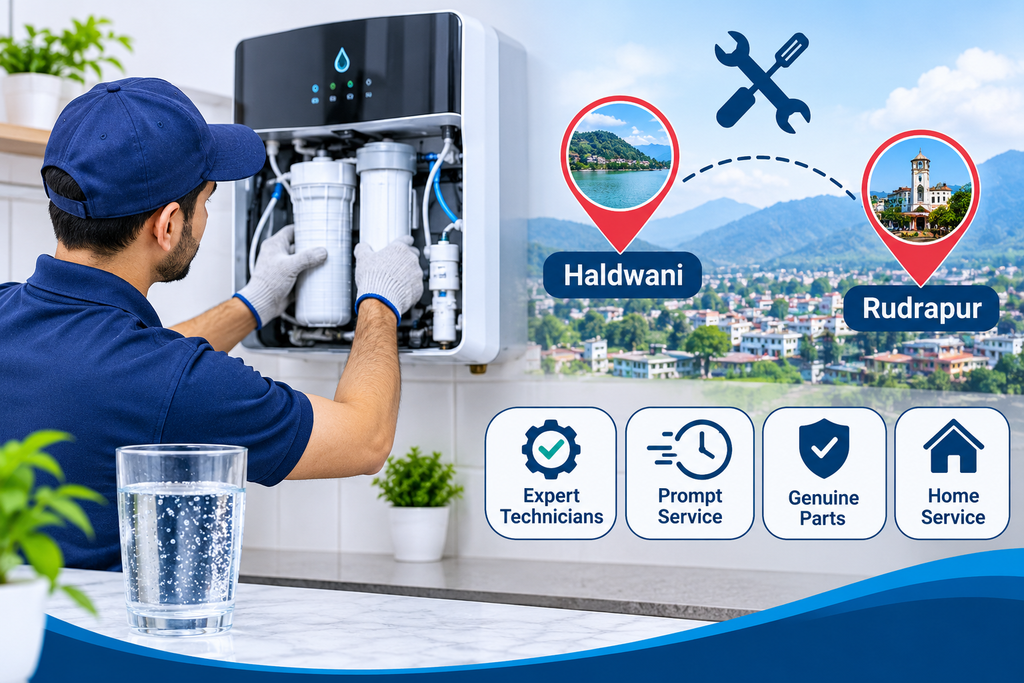
Where Can You Get Water Purifier Service in Haldwani and Rudrapur?
Correct installation, upkeep, and inspection can ensure that the water purifiers are working as they should. If a purifier shows signs of less effective performance, leakages, or strange taste, a technical inspection will provide the answers to the following concerns.
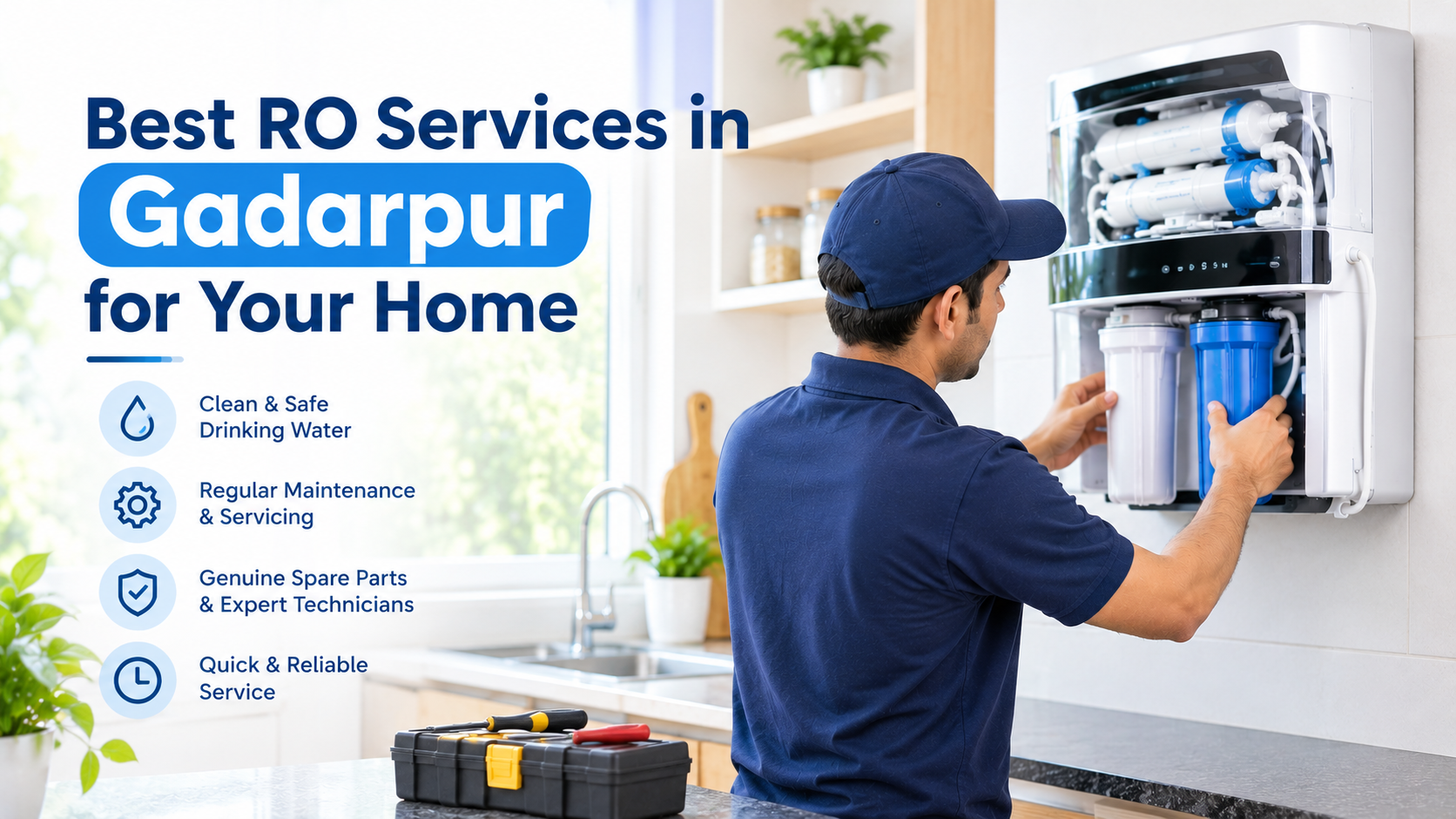
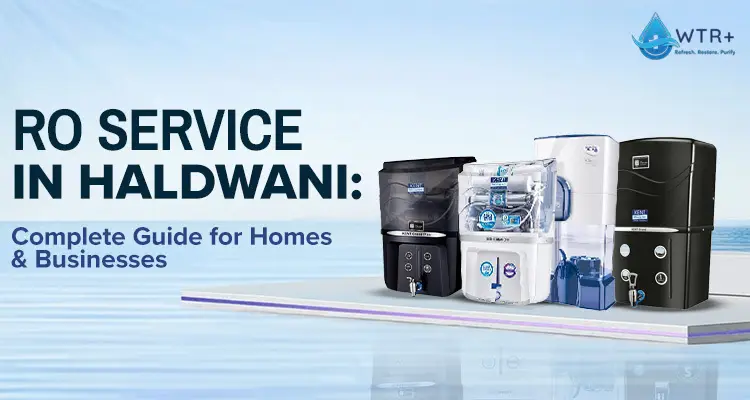
If you are looking for water purifier service in Haldwani, you can opt for WTR+ water purifier service for installation, maintenance, repairing, filter replacement, and other activities related to the water purifier.
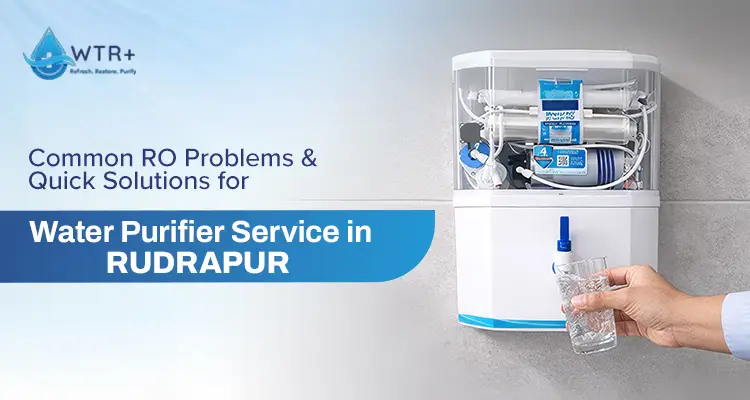
The same is applicable for those looking for water purifier service in Rudrapur; the customers can find water purifier services available according to their water purifier requirements.
With the use of the right technical services, any water purifier issues can be resolved without needing any replacement of components.
Conclusion
The correct water purifier will depend on your water source and any issues which may arise with it. Alongside considering the type of purifier, it is also beneficial to analyse your water and assess how easy it is to service. This in turn can allow people to better control their water supply.
Continual assessment and servicing can further ensure that a purifier continues to work well. Should servicing be needed, expert Haldwani water purifier servicers are able to diagnose and advise on the most fitting form of maintenance. Overall, knowledgeable decision making in relation to both purifying and servicing can enable people to better control their water supply.
Frequently Asked Questions
1. Which water purifier is best for a home in Haldwani?
The best water purifier depends on the incoming water quality, dissolved solids, possible contaminants and household requirements. RO, UV, UF or combination systems may be suitable depending on the water testing results.
2. Is RO purification necessary for municipal water?
Not always. Municipal water may already be treated, but its quality can change during distribution and storage. The need for RO should depend on water testing and the contaminants requiring treatment.
3. How often should a water purifier be serviced?
The servicing frequency depends on the purifier model, water quality, usage and manufacturer’s recommendations. Regular inspection can help identify when filters or other components need attention.
4. Why does my water purifier produce less water than before?
Slow water production may be caused by clogged filters, low water pressure, membrane problems, pump faults or storage tank pressure issues. A proper inspection can help identify the actual cause.
5. Does a high TDS reading mean water is unsafe?
Not necessarily. TDS measures the concentration of dissolved substances but does not identify individual contaminants. Water safety should be assessed based on appropriate testing and relevant water quality standards.
6. What should I check before booking RO water purifier service in Haldwani?
Check the service provider’s technical experience, inspection process, replacement component compatibility, service charges and maintenance recommendations before booking.
7. Can a water purifier improve the taste of drinking water?
Certain filtration technologies, particularly activated carbon filtration, can help reduce substances responsible for unpleasant tastes and odours. The improvement depends on the incoming water quality and the purifier’s filtration capabilities.